
The Country and the City of Porto
PORTUGAL AND THE CITY OF PORTO
ABOUT PORTUGAL
Location and Geopolitical Context
Portugal is located in the south-western corner of Europe, occupying the western part of the Iberian Peninsula. It is bordered by the Atlantic Ocean to the west and south (with approximately 940 km of coastline) and by Spain to the north and east. Its territory also includes the Atlantic archipelagos of the Azores and Madeira, which are autonomous regions with their own regional governments and legislative assemblies.
The name Portugal derives from the Roman-Celtic place located at the mouth of the Douro River, Portus Cale, with portus corresponding to a Latin word (port), while cale probably corresponds to an ethnonym derived from the peoples who occupied the northwest of the Iberian Peninsula.
A semi-presidential republic since 1976, Portugal has been a member of the European Union since 1986 and is also a member of the United Nations. It is also a founding member of NATO (1949), the Eurozone (1999), the OECD and the Community of Portuguese-speaking Countries (CPLP).
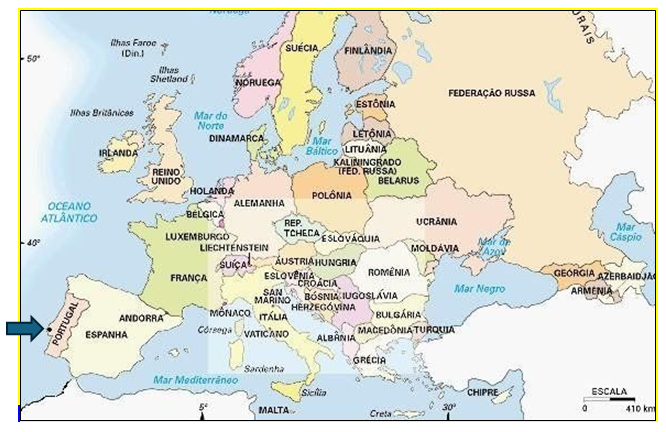
Fig. 1 – Portugal’s location in Europe
Physical environment: great geomorphological diversity
With an area of approximately 92,226 km² (mainland: 89,015 km²; Azores: 2,322 km²; Madeira: 801 km²), Portugal has a very diverse and appealing physical landscape. The most significant territorial heterogeneity is revealed when travelling across the country in a north/south direction, but these asymmetries must also be considered alongside the notable inequalities between the coast and the interior.
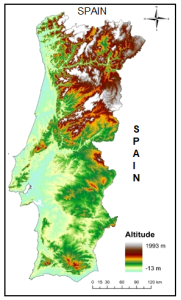
Fig. 2 – Relief of Portugal
North and Centre: dominated by mountainous terrain, with several mountain ranges exceeding 1,000 metres in altitude (Serra da Estrela at 1,993 m, the highest point on the mainland), in addition to the Marão, Alvão and Montemuro mountain ranges that border the Douro region, and the Serra do Gerês, where the highest rainfall in Portugal is recorded. The territory is criss-crossed by rivers running mainly east to west, such as the Minho, Lima, Cávado, Douro and Mondego. Inland, there are also vast plateau areas, especially in Trás-os-Montes and Beiras.
South: beyond the Ribatejo sedimentary basins (Tagus valley), lie the southern regions, dominated by plains and undulating peneplains, as in the Alentejo, with residual relief (São Mamede, Portel and Mértola mountains). The Algarve has three distinct areas: the mountains (Monchique and Caldeirão), the barrocal and the coast.
In terms of climate, Portugal is located in an area dominated by a transitional climate between temperate maritime and temperate Mediterranean, with hot, dry summers and mild, rainy winters, but with significant regional variations.
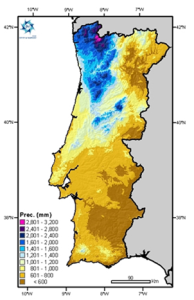
Fig. 3 – Average total annual rainfall (mm) in Portugal
The north and centre of the coast are characterised by abundant rainfall (especially in the north-west) and mild temperatures. The interior north and centre have a climate that reflects the interference of the mountain ranges that constitute obstacles to the passage of humid air masses on their west/east trajectory. This gives the interior a more continental character, recognisable in the existence of high temperature ranges, with maximum temperatures in summer exceeding 35ºC, while in winter we can find sub-zero temperatures, although snowfall is occasional and generally limited to higher altitudes.
The south stands out for its drier climate and higher average temperatures, with lower rainfall (especially in the interior of the Alentejo and Algarve regions). The Azores archipelago has a temperate maritime climate and the Madeira archipelago has a subtropical influence, with mild temperatures throughout the year and high rainfall.
Demographics: The existence of clear territorial asymmetries
According to the 2021 Census, Portugal had a population of approximately 10.3 million (2024 estimate: around 10.5 million). The average population density is around 112 inhabitants/km², but with profound territorial asymmetries.
The most densely populated areas are in the Lisbon metropolitan area (where more than a quarter of the country’s population is concentrated), the Porto metropolitan area and the Atlantic coast. Inland areas are very sparsely populated. In short, the main demographic differences are between the coast and the interior population densities (especially in the Alentejo interior).
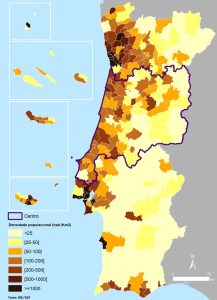
Fig. 4 – Population density in Portugal in 2021. (Source: Census 2021)
In fact, around 75% of the population lives less than 50 km from the coast, boosting the greater economic dynamism that exists there, better accessibility and the proliferation of services. Inland, depopulation is progressing, associated with a marked ageing of the population and less dynamic economic structures.
On the other hand, the highest densities are located in the north, despite the predominance of small agricultural holdings, but also due to the existence of impressive industrial and commercial sectors. This territorial and landscape diversity, surrounded by superb architectural, cultural, gastronomic and wine-growing heritage, will be explored in the study visits to be carried out during the In turn, excluding the Lisbon metropolitan area and its strong tertiarisation, the south of the Tagus valley stands out for its lower population densities (especially in the Alentejo interior).
Also noteworthy are the regional economic specialisations, particularly in the Douro Demarcated Region, iconic for its landscapes and production of exceptional quality wines, with Port Wine being the highlight. This emblematic area will also be the subject of study visits. However, tourism is becoming increasingly important, revitalising these peripheral areas, which are rich in history, heritage and culture.
In the south, there is an extensive agricultural economy, which is becoming increasingly specialised (cereals, wines, nuts), but also a flourishing tourism industry.
The main metropolitan areas are Lisbon (around 2.9 million inhabitants) and Porto (around 1.7 million inhabitants), which together account for almost 45% of the total population. Average life expectancy is around 82 years (2024), the birth rate is declining (around 7.8‰ in 2023) and the ageing index is rising (around 182 in 2021) (Source: INE).
History and heritage
Portugal is one of the oldest states in Europe. The territory has been inhabited since prehistoric times by pre-Celtic and Celtic peoples, invaded by Phoenicians, Carthaginians and Greeks, and ruled by the Romans, who left a deep mark. This was followed by invasions by the Suevi, Visigoths, Germanic peoples and Moors (711-1249).
Independence was declared in 1143, after the Battle of Ourique, with Afonso Henriques being proclaimed the first monarch of Portugal. The kingdom was internationally recognised in 1297 by the Treaty of Alcanices, which established its borders with Castile, making it one of the countries with the oldest and most stable borders in the world.
With golden ages interspersed with periods of decline, it is worth highlighting the Age of Discovery (15th-16th centuries) when Portugal led European maritime expansion, establishing the first global empire. This period saw remarkable discoveries, including the crossing of Cape Bojador (1434) and Vasco da Gama’s arrival in India (1498), as well as the discovery of Brazil (1500) and the circumnavigation achieved by Fernão de Magalhães (1519-1522). Portugal thus became one of the world’s greatest economic, political and military powers, establishing trade routes between Europe, Africa, Asia and America.
The 19th century, on the other hand, was marked by severe instability. In 1755, the Lisbon earthquake, followed by a tsunami and fires, destroyed much of the capital, and between 1807 and 1811, Portugal suffered French invasions. The Revolution of 1820 led to the first Portuguese Constitution (1822) and the proclamation of a constitutional monarchy, followed by the independence of Brazil in 1822 and the struggles between liberals and absolutists.
But let us focus on the contemporary period. The early 20th century was very turbulent, with a succession of crises that had visible repercussions in all areas (social, economic, cultural, etc.), which led to the Republican Revolution of 1910, the abolition of the monarchy and the establishment of the First Republic in Portugal. Between 1926 and 1974, Portugal lived under a military dictatorship, which was interrupted by the Carnation Revolution on 25 April 1974. This marked the beginning of democratisation in Portugal.
In 1976, the Constitution of the Portuguese Republic was approved, establishing a pluralistic democracy and a semi-presidential republic. In 1986, Portugal joined the European Economic Community (now the European Union), a fundamental milestone in the country’s modernisation. In 1999, the euro was adopted as the official currency.
Today, Portugal is a democratic country and a full member of the EU, with a diversified economy based on services (especially tourism), industry and agriculture. It maintains close ties with Portuguese-speaking countries through the CPLP, which represents a community of more than 290 million Portuguese speakers on four continents.
ABOUT THE CITY OF PORTO
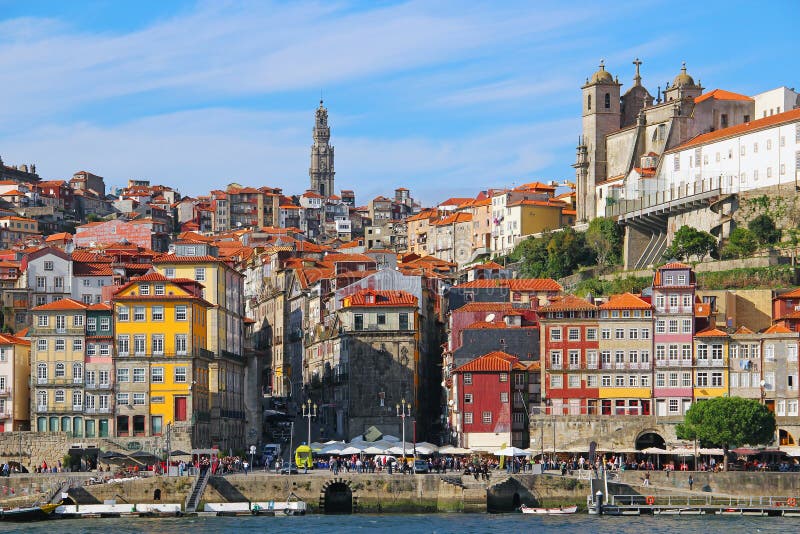
Fig. 5 – Panoramic view of Ribeira do Porto, an area classified by UNESCO
Location and Setting
Located on the right bank of the Douro River, near its mouth on the Atlantic Ocean, the city of Porto is the capital of the district of the same name and the second largest city in Portugal. The centre of a metropolitan area with around 1.7 million inhabitants, it stretches from the Atlantic coast to the interior of the Douro Valley. The city is located approximately 300 km north of Lisbon and is the epicentre of the Northern Region of Portugal, where around 3.7 million inhabitants live. In the Northern Region, we also find medium-sized cities such as Viana do Castelo, Guimarães, Braga, or even Vila Real and Lamego, urban centres of historical and heritage significance that we will visit on the study trips included in the activities of this Conference.
Some historical notes
But let us stick to the urban centre of Porto. An urban centre with a long history, it has traces dating back to Roman times, when the city, called Portus (on the right bank) and Cale (on the left bank), was considered a strategic city of the Roman Empire. The Celtic-Latin name combining Portus and Cale was the origin of the name Portugal.
During the Middle Ages, Porto grew as an important commercial and military centre, its walls being reinforced several times. In the 15th and 16th centuries, under the coordination of Prince Henry the Navigator, the people of Porto actively participated in Portuguese maritime expansion.
With regard to the production and export of Port Wine, the 18th century stands out as the Douro Demarcated Region was defined and regulated, and its connection to Porto, the hub through which the wine was exported, was established. In the 19th century, there was marked industrial, commercial and urban development, despite the constraints resulting from resistance to French invasions and the important role played in the liberal struggles.
In the 20th century, urban expansion accelerated with the construction of new bridges over the Douro River, which boosted metropolitan development. In 1996, the historic centre was classified as a World Heritage Site by UNESCO, thus recognising its exceptional architectural and urban value.
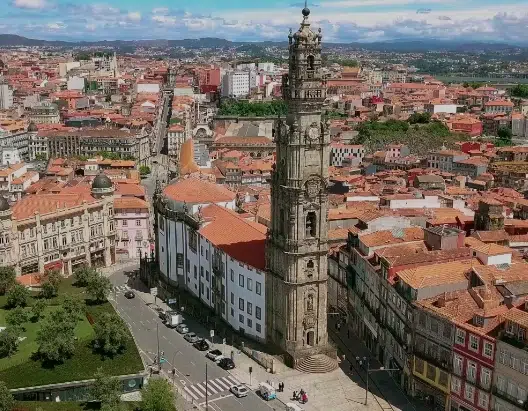
Fig. 6 – Clérigos Tower and historic area of the city.
The City of Port Wine
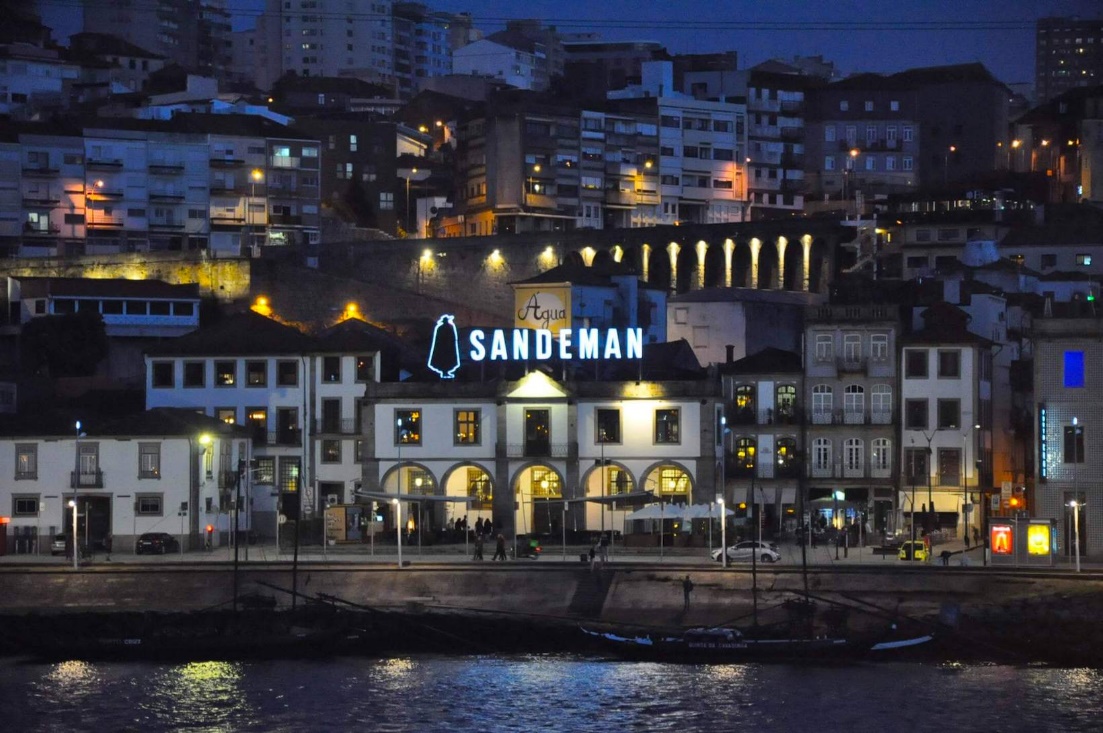
Fig. 7 – Port wine cellars in Vila Nova de Gaia
Porto is obviously inseparable from the famous Port Wine, one of Portugal’s most prestigious export products. This fortified wine, produced in the Douro Demarcated Region, established in 1756, took its name from the city, as it is in the metropolitan area of Porto, especially in Vila Nova de Gaia (on the left bank of the Douro), that the cellars where the wines are aged and matured are concentrated, as well as being packaged and exported all over the world.
Port wine, traditionally transported by rabelo boats from the Douro region where it is produced, then by train and now by road, has established a privileged historical relationship with the United Kingdom, France and the United States, as well as other international markets, contributing to the prosperity and international reputation of the city of Porto. Here is one of the attractions to visit the cellars and taste their wines.
Distinctions and International Recognition
With its superb heritage and unique history, culture and urban scenery, Porto has consistently been recognised as one of Europe’s most attractive tourist destinations. For example, the city was named Best European Destination in 2012, 2014, 2017 and 2022 (competing with cities such as London, Rome and Berlin).
USA Today also named this city Best Under-the-Radar Romantic Destination in 2015, while Lonely Planet highlighted it as one of the Top 10 Best Value Cities in 2017. In 2020, at the World Travel Awards, the city of Porto was voted World’s Leading City Break Destination. Thus, it receives continuous recognition for its historical and architectural heritage, but also for its gastronomy, wines, traditions, hospitality and quality of life.
Heritage and Attractions
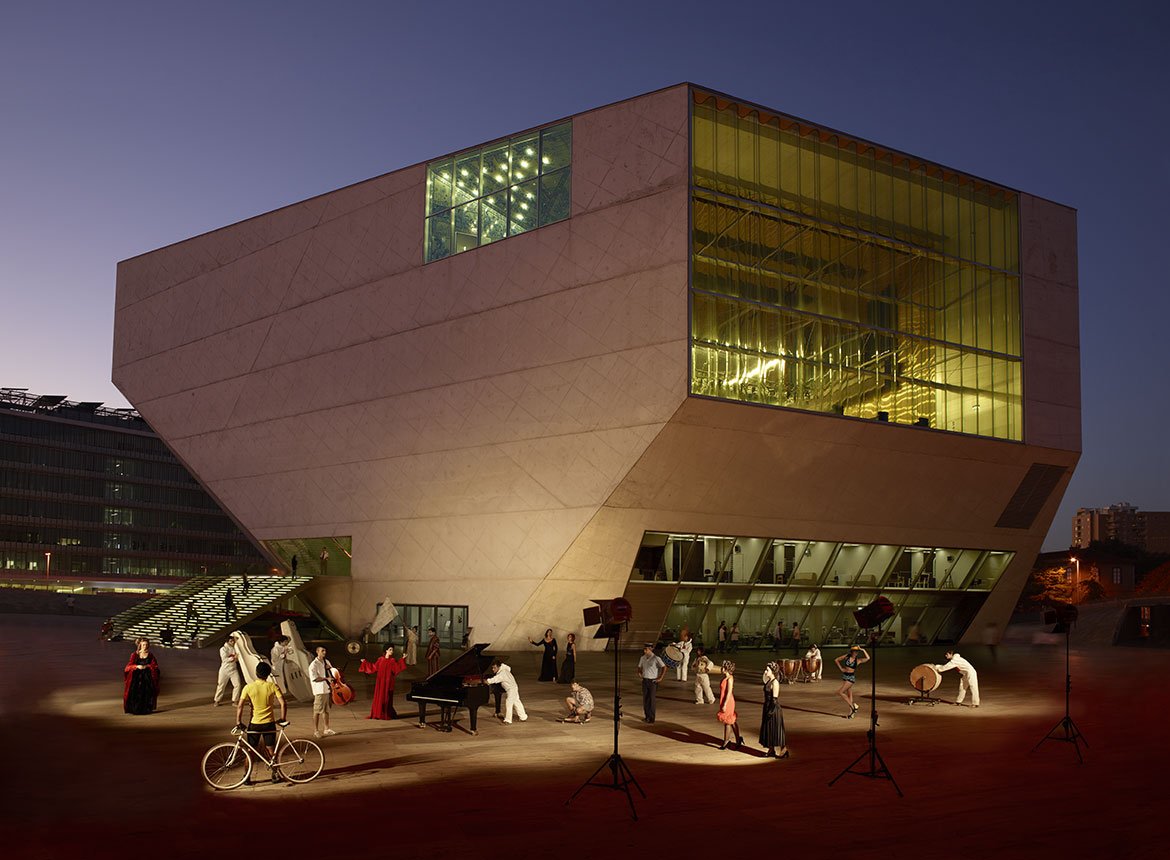
Fig. 8 – Casa da Música
Among the monuments and places of interest are the Clérigos Tower, an icon of the city designed by Nicolau Nasoni in the 18th century; the Cathedral, a Romanesque monument with Gothic and Baroque elements; the Palácio da Bolsa, a 19th-century neoclassical building with the stunning Arab Room; the Church of São Francisco, a Gothic church with a Baroque interior in gilded woodcarving; São Bento Station, covered with around 20,000 tiles depicting scenes from Portuguese history; the D. Luís I Bridge, a metal structure designed by Téophile Seyrig in 1886; Ribeira, the historic riverside area and heart of Porto’s social life; the Serralves Foundation, with a contemporary art museum and an 18-hectare park featuring a variety of formal gardens, woods and a traditional farm; the Casa da Música, a contemporary concert hall designed by Rem Koolhaas, opened in 2005; it is intended for cultural performances, but also supports artistic training and creation.
And many more attractions can be discovered and enjoyed in this monumental city, Porto. Be amazed!
Cultural Experiences and Contemporary Porto
In addition to its exceptional and distinctive architectural heritage, spanning multiple historical periods that portray the evolution and importance of this historic centre, Porto also offers a rich cultural experience that combines tradition and modernity. Port wine tastings in the cellars of Gaia are a must, as is sampling the characteristic cuisine (francesinha, tripas à moda do Porto, bacalhau). Added to this are the festivities of São João (23-24 June), which are the city’s main popular festival, which you will have the opportunity to experience. Cultural life is vibrant, with theatres, museums, galleries and music festivals throughout the year.
Today, Porto is a dynamic city that has managed to preserve its historical heritage while modernising. The city has benefited from significant investments in infrastructure (the Porto Metro opened in 2002) and urban regeneration, as well as consolidating its position as a leading university centre (the University of Porto is one of the largest in the country) and a hub of technology and innovation. It is also a tourist destination of excellence, with significant growth in national and international visitors, as well as being a creative city, as recognised by UNESCO, which has distinguished it in the Media Arts category since 2017.
A city that polarises the metropolitan area of Porto, it is undoubtedly the economic engine of the Northern Region, with a strong industrial tradition (textiles, footwear, metalworking), although it is increasingly investing in sectors with higher added value, as well as in the technological and knowledge economy.
For more information
About Portugal:
Visit Portugal: www.visitportugal.com
Portugal.gov.pt: www.portugal.gov.pt
National Statistics Institute: www.ine.pt
About Porto:
Porto and Northern Portugal – Tourism: www.portoenorte.pt
Visit Porto: www.visitporto.travel
Municipality of Porto: www.porto.pt